Mohali, New Delhi, December 4, 2025 : Nanoplastics from Single-Use PET Bottles Found to Harm Gut Bacteria and Human Cells
A groundbreaking study conducted at the Institute of Nano Science and Technology (INST), Mohali, has provided the first clear scientific evidence that nanoplastics derived from single-use PET bottles can directly disrupt vital biological systems, posing significant risks to human health. The findings, released today, shed new light on how microscopic plastic particles—now increasingly detected in food, water, and even human tissues—may interfere with gut microbes, blood cells, and human cellular functions.
Nanoplastics have long been a global concern, but their direct effects on beneficial gut bacteria remained largely unknown. Since gut microbes regulate immunity, metabolism, and mental well-being, understanding their response to plastic exposure is crucial.
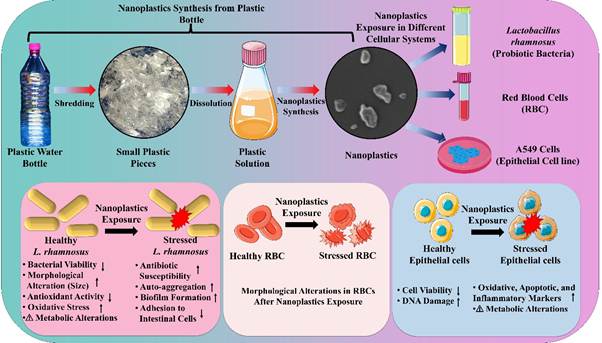
Researchers at INST, an autonomous institute under the Department of Science and Technology (DST), recreated PET-derived nanoplastics in the laboratory and tested them across three biological models: Lactobacillus rhamnosus (a beneficial gut bacterium), red blood cells, and human epithelial cells.
Key Scientific Findings
1. Harm to Gut Microbiome
Long-term exposure to nanoplastics caused:
- Reduced bacterial growth and colonization
- Loss of protective microbial functions
- Increased stress responses
- Higher sensitivity to antibiotics
This indicates that nanoplastics may destabilize the human microbiome, undermining core health functions.
2. Damage to Red Blood Cells
At higher concentrations, nanoplastics disrupted red blood cell membranes and triggered hemolytic changes, raising concerns about potential bloodstream toxicity.
3. Cellular-Level Toxicity in Human Epithelial Cells
Human cells exposed to nanoplastics showed:
- DNA damage
- Oxidative stress
- Apoptosis (programmed cell death)
- Inflammatory signalling
- Altered nutrient and energy metabolism
These disruptions highlight the biological activity and toxicity of nanoplastics inside the human body.
Broader Implications
Published in Nanoscale Advances, the study reveals that nanoplastics are not inert environmental residues, but active particles capable of interfering with essential biological systems. The results suggest potential long-term consequences for human health and underscore the need for policy reforms and reduced reliance on single-use plastics.
The insights may also impact fields such as agriculture, food safety, and ecosystem science, where microbial balance and plastic pollution intersect.